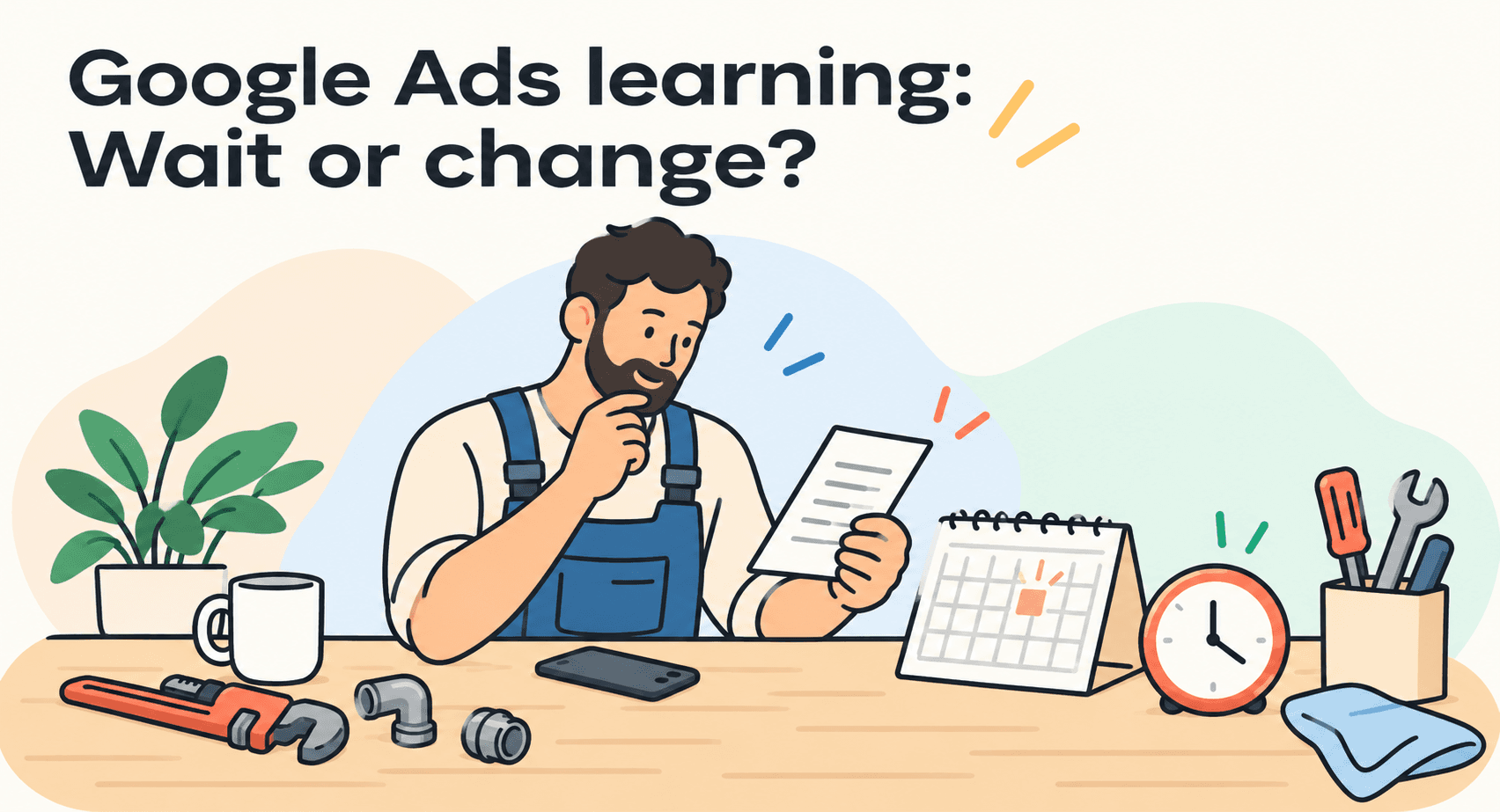
Google Ads learning status is a prompt to check what changed, not a reason to leave a broken campaign alone. Before making another adjustment, check your conversion tracking, the time customers take to convert and the quality of the enquiries reaching your team.
Search Engine Roundtable reported Google's rewritten Smart Bidding learning guidance on October 21. The useful question for a local service business is practical: should you wait for better information, fix something now, or make another deliberate campaign change?
Here is how we would make that decision without turning every daily movement into a new experiment.
What Google's seven-day learning limit means
Google's current Smart Bidding guidance says the visible Learning status lasts no more than seven days. It marks structural changes, such as a new strategy, changes to the campaigns or keywords using it, or a significant conversion-goal change.
Budget, target, creative and targeting edits do not trigger that status or erase historical data. They can still change performance. A missing badge is not proof that your latest adjustment has finished working.
The same guidance describes one to two conversion cycles for performance to settle towards a changed goal. After that, Google recommends evaluating over two conversion cycles or two weeks, whichever is longer, allowing for delayed conversions. These are review guidelines, not a promise of a profitable campaign on a particular day.
We recommend keeping three questions separate: has the status changed, has the data had time to arrive, and are the enquiries useful to your business? The last question needs information from the people handling the work.
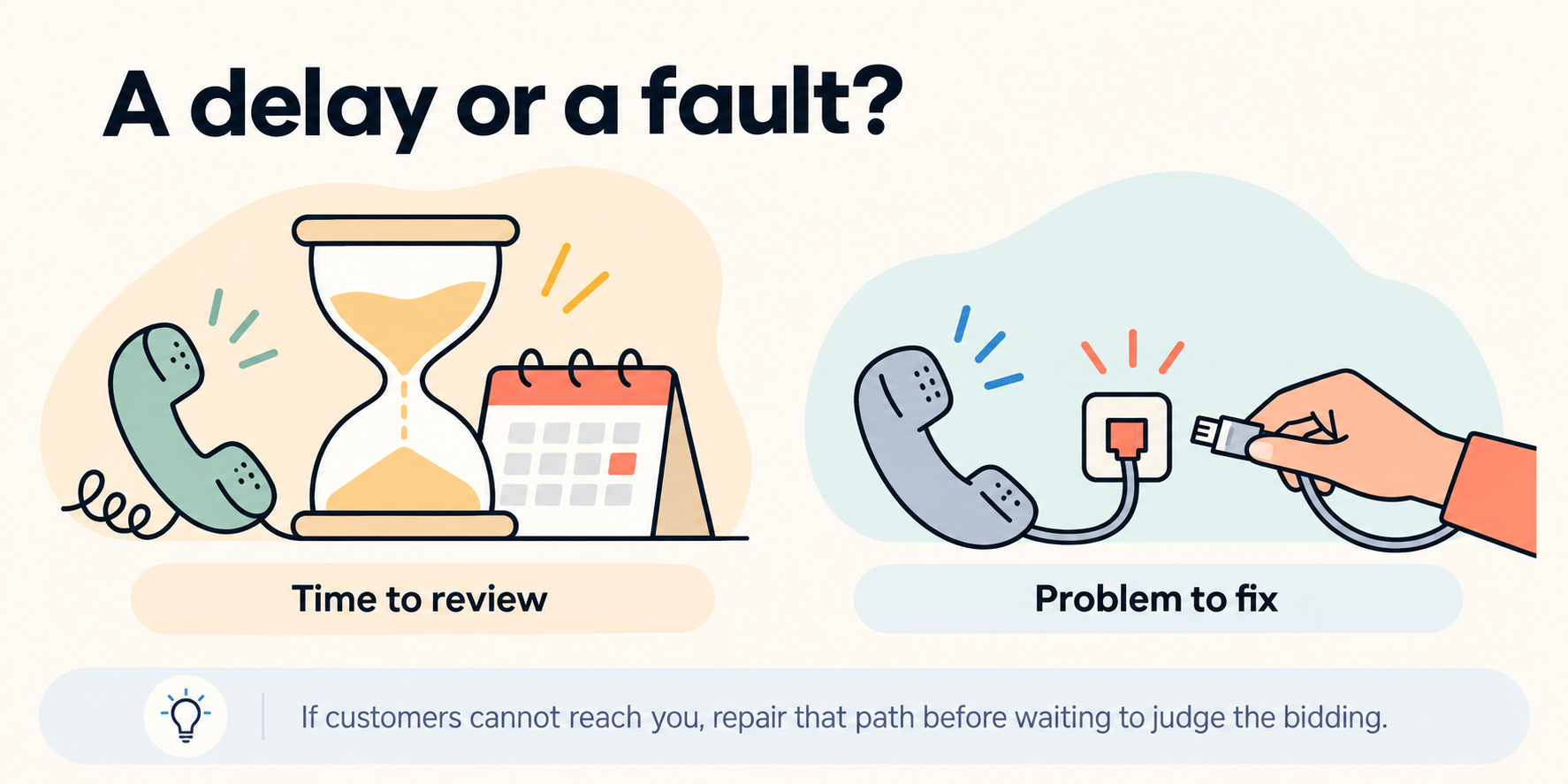
Separate a reporting delay from a problem you should fix
If a customer takes several days to request a quotation, today's clicks cannot tell you their final outcome. If the quotation form is broken, waiting several days will not repair it. Both situations can look like a campaign with too few conversions, but they need different responses.
Start with the customer journey. Can someone reach the intended service page, call the right number and submit an enquiry? Does the office receive it? Use your normal authorised checking process rather than repeatedly clicking your own paid ads.
Then ask the person managing your ads whether the recorded conversion still means what the business thinks it means. A thank-you-page visit, a completed form and a confirmed installation appointment are different events. Make sure the report is counting the intended event once.
Use this short decision aid before changing another setting:
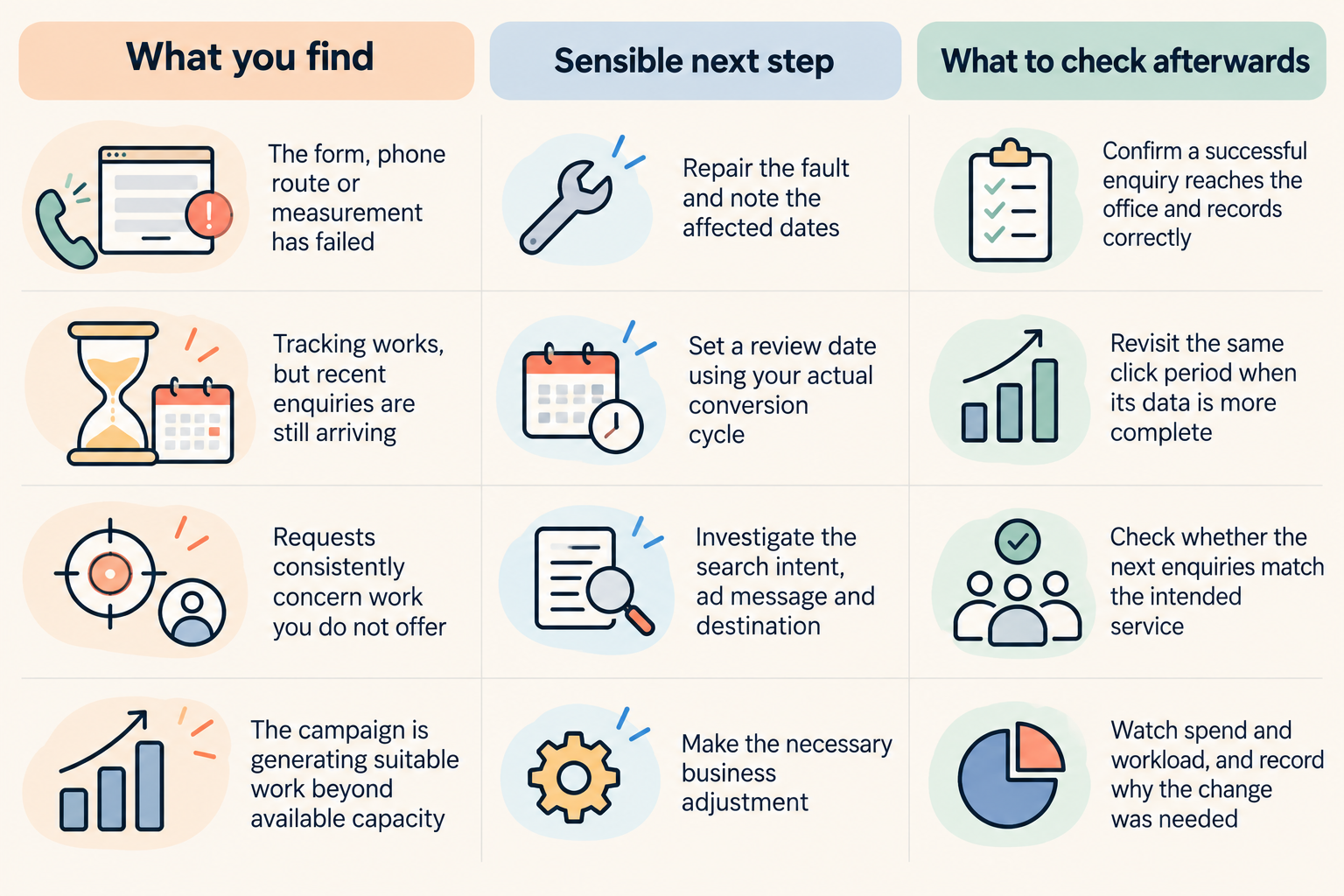
Waiting should be an active choice with a review date. It should never mean that nobody is checking whether customers can contact you.
Find the delay that matters for your campaign
A conversion cycle is the time from an ad click to a conversion. Google's definition includes reporting time when you import conversions. That matters when your office confirms a job on Tuesday but the advertising account receives that information later.
Ask which conversion the campaign is using. A request for a call-back may happen quickly. A confirmed replacement installation can follow a longer conversation. Do not borrow a review schedule from an unrelated campaign with a different customer decision.
Open the bid strategy report, which brings together the status, average target, actual performance and conversion-delay information. Check the reporting period as carefully as the headline number. Where estimates are available, use them as a warning that the recent period is incomplete, not as extra confirmed customers.
For your own review note, record the typical delay shown, the conversion being measured and the date you checked it. If your data is too sparse to establish a useful pattern, say so. Combine a longer observation period with the office's actual enquiry records rather than treating a small average as a reliable timetable.
For example, a campaign bringing in urgent repair calls and one promoting planned installation estimates may need separate review conversations. Their response times, job values and operational constraints can differ even when the same person answers the phone.
Make the next change easy to understand
Choose one clear business question before editing. “We want more leads” is too broad to help the next review. “Are installation enquiries becoming too expensive after the target change?” gives you something specific to examine.
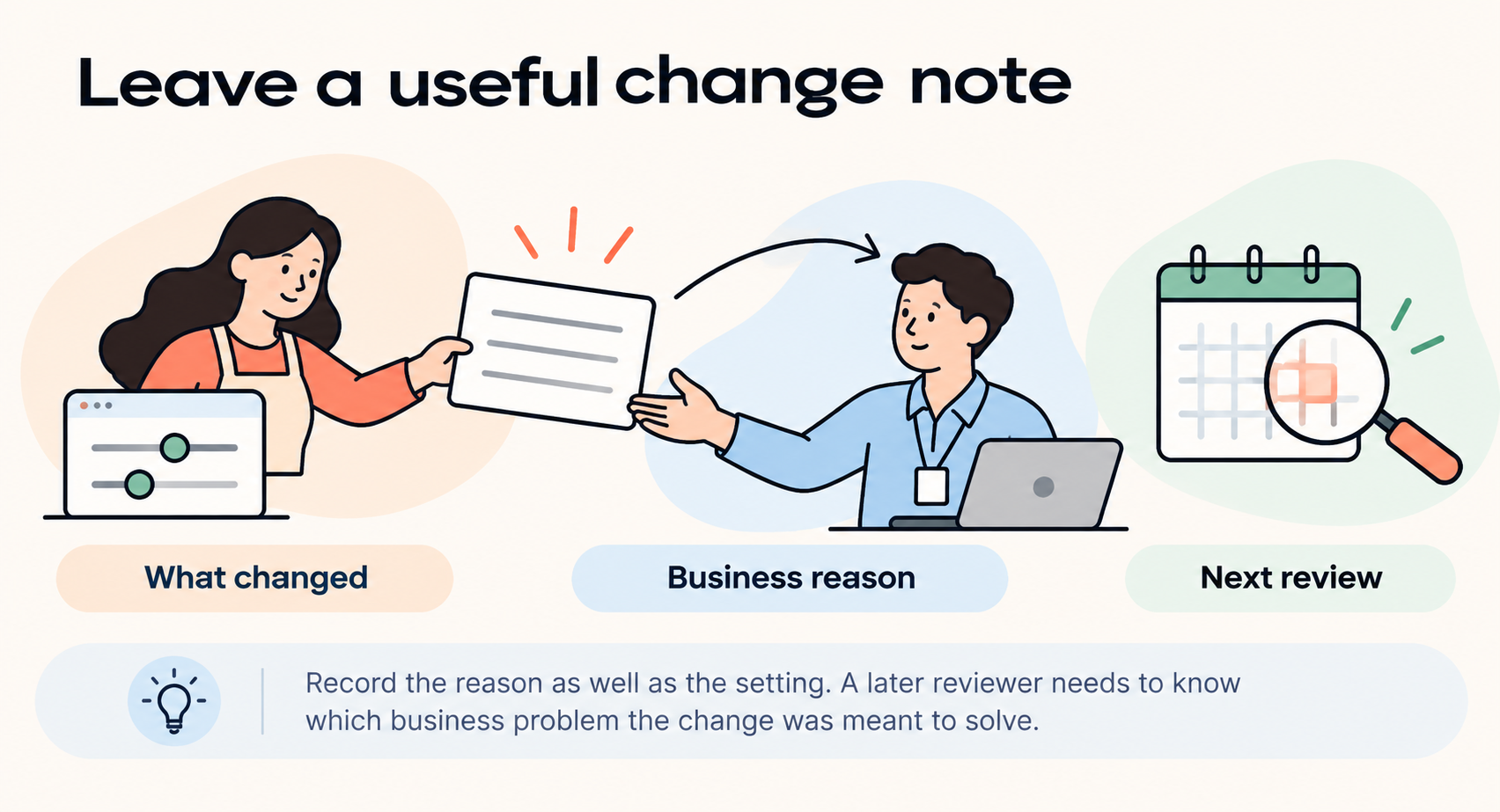
Keep a short change note that both the owner and ads manager can understand:
- Campaign and service: Which work are we trying to attract?
- Change and date: What exactly changed, and when?
- Business reason: What problem are we trying to solve?
- Conversion: What event does this campaign count?
- Comparison: Which earlier period is a fair baseline?
- Review date: When should enough of the relevant data have arrived?
- Exception: What would justify acting sooner?
- Owner: Who checks the result and agrees the next step?
This is enough to make a routine change explainable. You do not need a complicated dashboard before keeping a useful note.
Where possible, avoid changing the bid target, landing page and advertising message together while trying to understand one result. Google's bidding-test guidance recommends changing one variable at a time. A formal experiment has its own recommended duration; the seven-day status limit does not replace its test plan.
There will be exceptions. A service you can no longer deliver should stop being promoted, and a broken form needs attention. Make the necessary correction, record it and recognise that the comparison now includes another change. Clear records are more useful than pretending the original test continued untouched.
A local-service example: the same clicks, a different report
Consider this illustrative example, using hypothetical figures rather than a JC Labs client result.
A plumbing business reviews one completed period with $1,000 in ad spend. At its first check, five conversions have been reported. The displayed cost per conversion is $1,000 ÷ 5 = $200.
At a later check, ten conversions are reported for that same click period. With the same $1,000 spend, cost per conversion becomes $1,000 ÷ 10 = $100.
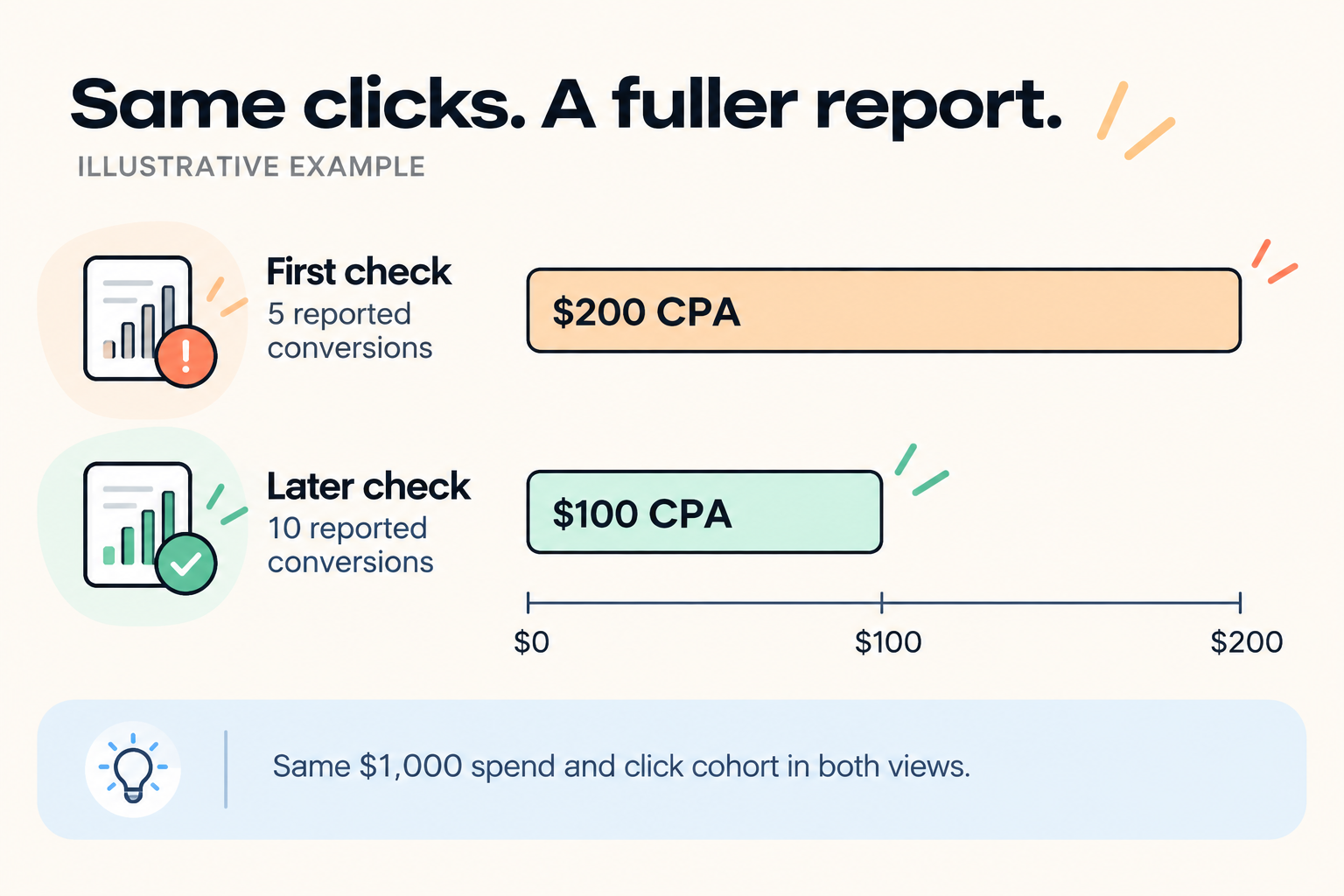
Nothing in that calculation proves a new settings change improved performance. The later view contains more reported outcomes from the same group of clicks. Google's conversion-lag explanation describes why recent cost per acquisition can initially look higher while conversions are still coming in.
The business should now look at what those ten conversions represent. Did customers request the advertised service? Were enquiries duplicated? Did the team make contact? Were any jobs booked? An improved cost per recorded conversion can still leave the owner with unsuitable work.
The useful comparison is not Monday's unfinished report against Friday's fuller report labelled as two different campaign results. Compare like periods with similar services and sufficiently mature data, then connect the advertising records to the actual conversations.
Turn the review into one clear next step
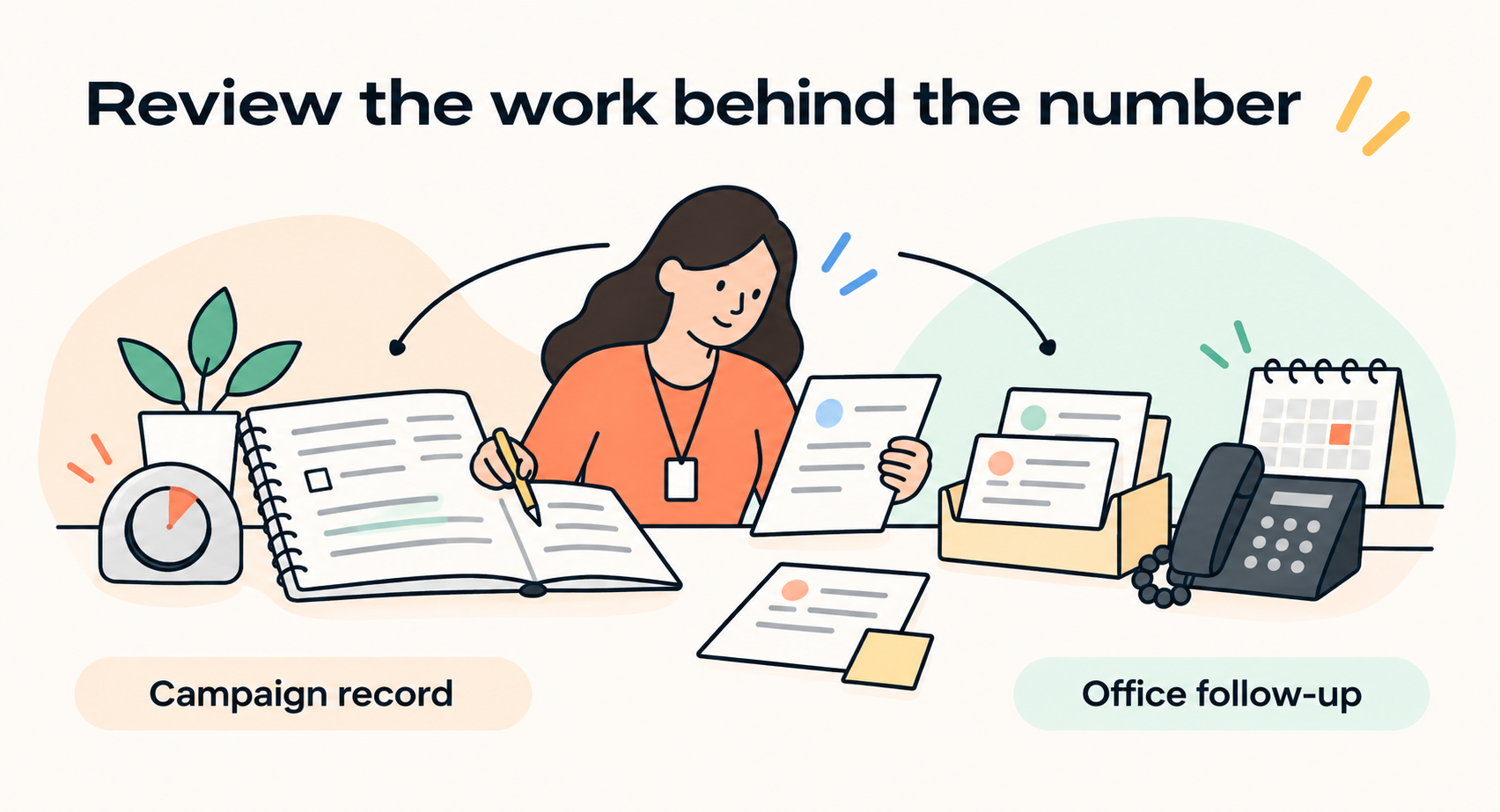
At the agreed review, bring the campaign report and office notes together. The ads manager can explain spend, recorded conversions and the changes made. The person handling enquiries can explain the requested work, serviceability, contact failures and bookings.
Finish the conversation with one of three outcomes:
- Keep observing: The data is still incomplete or the sample is too small. Set the next date and say what information is missing.
- Keep the change: The result is acceptable against the business goal. Continue monitoring the same measures.
- Make a specific adjustment: The evidence points to a problem or opportunity. Record the reason, expected direction and next check.
A useful lightweight automation can prepare that conversation. After a campaign change, create a dated reminder and attach the relevant report period. Before the review, bring in the office's enquiry outcomes. If a report or import fails, flag it for the person responsible instead of filling the missing field with zero.
Keep approval of budget and targeting decisions with the person responsible for the business. A reminder can collect information; it should not decide that a cost movement means the budget must change.
Frequently asked questions
Should I increase the budget when Learning disappears?
Use the business case and the enquiry results to decide. Check whether the work is suitable, whether your team can handle more and whether the comparison includes complete data. A status change alone is not a reason to spend more.
Can I fix a tracking problem while the campaign is learning?
Yes. Fix a genuine fault and note when it happened. Confirm that the intended event records correctly and reaches your team. Keep the affected period visible in the review so missing data is not mistaken for customer behaviour.
What if I only receive a few enquiries each month?
You may need a longer period and closer attention to individual enquiries. A small number of outcomes can move an average sharply. Avoid treating one expensive request or one good booking as proof that the whole strategy has changed.
Does this seven-day rule apply to a bidding experiment?
It is a status limit, not an experiment-completion rule. Follow the experiment's own design, ramp-up and evaluation guidance. Do not stop an experiment simply because a campaign badge has disappeared.
Should we judge the ads by clicks, enquiries or booked jobs?
Choose the measure that answers the decision you are making, and keep the stages separate. Clicks describe traffic, enquiries describe contact attempts, and confirmed bookings describe a later business outcome. Your campaign report and office records should make those differences clear.
Give the next review a useful question
Before touching another setting, write down the change you are assessing, the information still missing and the next review date. Check the enquiry path now, then give the relevant customer outcomes time to arrive.
If your reports keep prompting changes but nobody can connect them to suitable work, talk with Joseph about Google Ads management at JC Labs. We can help you bring campaign decisions, measurement and enquiry follow-up into the same conversation.