If you want your Canadian business to appear accurately in AI answers, start with the information a customer needs to hire you: the service, the area you cover, opening hours and a working enquiry route. Check how an answer describes your business, then correct the source of any mistake you can verify.
A vendor's visibility percentage cannot tell you whether your plumbing company in Burnaby will be recommended. It can raise a useful question: are you checking what customers actually see beyond your own Google ranking?
What the 1.2% figure does and does not tell you
SOCi's 2026 research reported a 1.2% ChatGPT recommendation rate for the brand locations it studied. Its published methodology explanation says each AI platform was asked for ten businesses in an industry and market; appearing in the first five counted as a recommendation.
That is a result from a defined vendor study. It is not evidence that only 1.2% of all Canadian businesses can appear in AI answers. Nor does it mean a business outside the sample has a 98.8% chance of being ignored. The question, location, product and measurement method affect what such a test tells you.
Our earlier version presented the percentage too broadly. The useful response is to check your own business information and customer journey, rather than treat that number as your forecast.
Read a visibility statistic alongside its sample and test method before using it to set a target.
Keep the Google work grounded in Google's guidance
Google's guidance for AI features says ordinary Search fundamentals still apply. A supporting page must be indexed and eligible for a Search snippet. There is no special AI schema or separate technical requirement that guarantees inclusion.
That guidance concerns Google's AI features. It does not disclose how every other assistant chooses local businesses. Treat claims about a universal AI ranking formula with care.
For Maps and local Search, Google describes relevance, distance and prominence as the main considerations in its local-ranking guidance. You can improve the accuracy and usefulness of your information. You cannot buy a guaranteed recommendation by completing a checklist.
Start with the facts that could cost you an enquiry
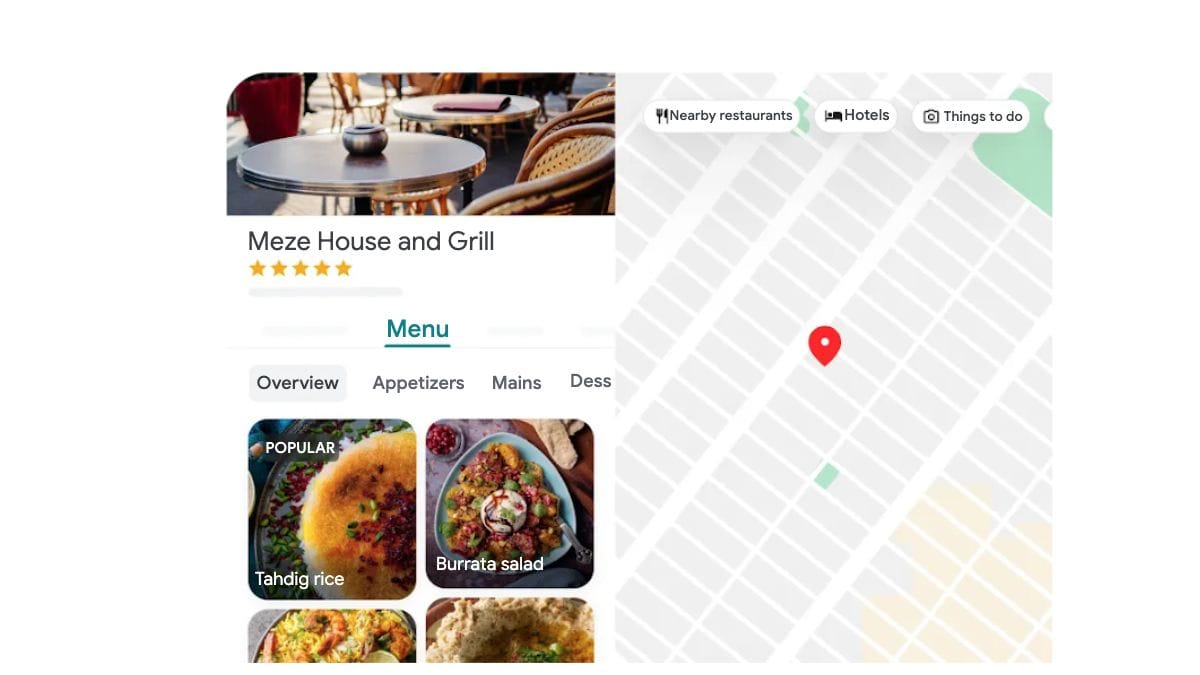
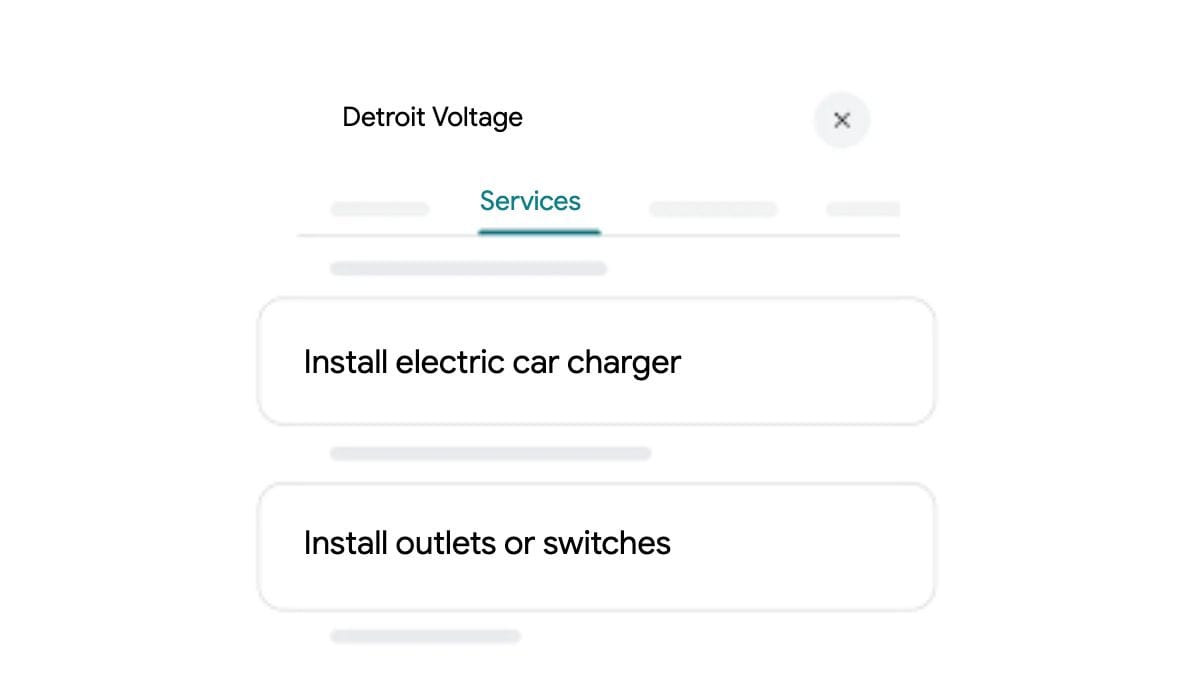
Open your public Business Profile and your website as a customer would. Check whether the hours agree, the website link reaches the right page and the services shown are ones you currently provide.
For a service-area business, describe where you actually work. Keep a private home address private where Google's service-area rules require it. Do not publish an address or add locations just to create more apparent coverage.
A hypothetical electrician who no longer takes weekend appointments should correct an old weekend-hours claim before commissioning more content. An extra article will not help the homeowner who arrives with the wrong expectation.
Prioritise a wrong opening time, service or contact route before cosmetic listing differences.
Use a small change record when details move: the agreed fact, where it is displayed, who can change it and whether the public version has been checked. Focus on information that changes meaning. “Street” and “St.” are not, by themselves, proof that an AI tool has excluded your business.
Give each important service a useful page
A service page should help someone decide whether to contact you. Explain the work you take on, the area you cover, how an enquiry is handled and any practical limits the customer needs to know.
Use real job photos where you have permission. Describe what they show without inventing a customer result. A heat-pump repair page can explain the systems you service and the information you need before a visit. It does not need a claim that every AI assistant prefers that page.
Avoid making dozens of near-identical city pages. If two pages offer the same answer, consider whether one well-maintained page would serve the reader better. A separate page earns its place when there is useful local information to explain.
A clear service page helps a customer assess fit even when they arrive through a source you did not expect.
Run a repeatable check of the answers customers see
Choose a small set of real customer questions. Include the service and city where relevant, such as “Who repairs heat pumps in Langley?” Keep the wording in your record so you can compare the same check later.
For each answer, record the product, date, question, location context, business details shown and any cited page. Save enough evidence to revisit the finding. Avoid entering customer names, job records or other private information into the tool.
| Finding | Useful next action |
|---|---|
| Your business is absent | Record it as one observed answer. Check discovery and page usefulness before drawing a wider conclusion. |
| Your hours or service are wrong | Find the cited or public source where possible, correct the fact and check the public version. |
| An old page is cited | Update that page if it is yours. If it belongs to someone else, use its normal correction process. |
| The business appears accurately | Check that its website and enquiry route work. Appearance alone does not establish a lead or booked job. |
Repeat the check on a manageable schedule and after a material business change. A single answer is an observation, not a market-share measurement. Use enquiries and booked work to judge business value alongside visibility.
Keep the observed answer, verified fact and correction in the same record so the next check has a clear purpose.
Use automation for the checking work you can define
A useful first workflow is a reminder and change queue. When hours or services change, create a task for each place that needs updating. Give each task an owner and keep it open until someone checks the public result.
Automation can also organise screenshots and source links for a review. Keep approval with someone who knows the business. Do not let a generated answer rewrite your operating hours or publish a new service automatically.
Reviews deserve the same care. Invite genuine feedback without incentives, pressure or a request for particular wording. Google's contribution policy does not allow selectively soliciting positive reviews or asking customers for specific review content. There is no verified quota of fifty reviews across three platforms that guarantees AI visibility.
Frequently asked questions
Does a good Google Maps position guarantee an AI recommendation?
No. Different products and questions can return different answers. Check the result you are interested in and keep Google rankings, observed AI answers and actual enquiries as separate measures.
Do we need a special AI file or new schema type?
Google says no special AI markup or machine-readable file is required for its AI Search features. Keep existing structured data accurate and consistent with the visible page rather than adding unsupported business claims.
Should we pay for every directory listing?
Start with the places your customers use and the listings that contain a material error. Assess any paid directory on its relevance and likely business value. A long list of directory submissions is not evidence of a guaranteed recommendation.
Choose the first correction you can verify
Check one service, one location and the enquiry route this week. Fix the clearest wrong fact, improve a page where a customer would struggle to assess fit, and record the public outcome. That gives you a useful next step without buying into a universal visibility formula.
Learn more about Google Business Profile management if you would like help keeping profile information, photos and reviews organised. Tell us which services and locations need attention, and we can work out a sensible starting point.