
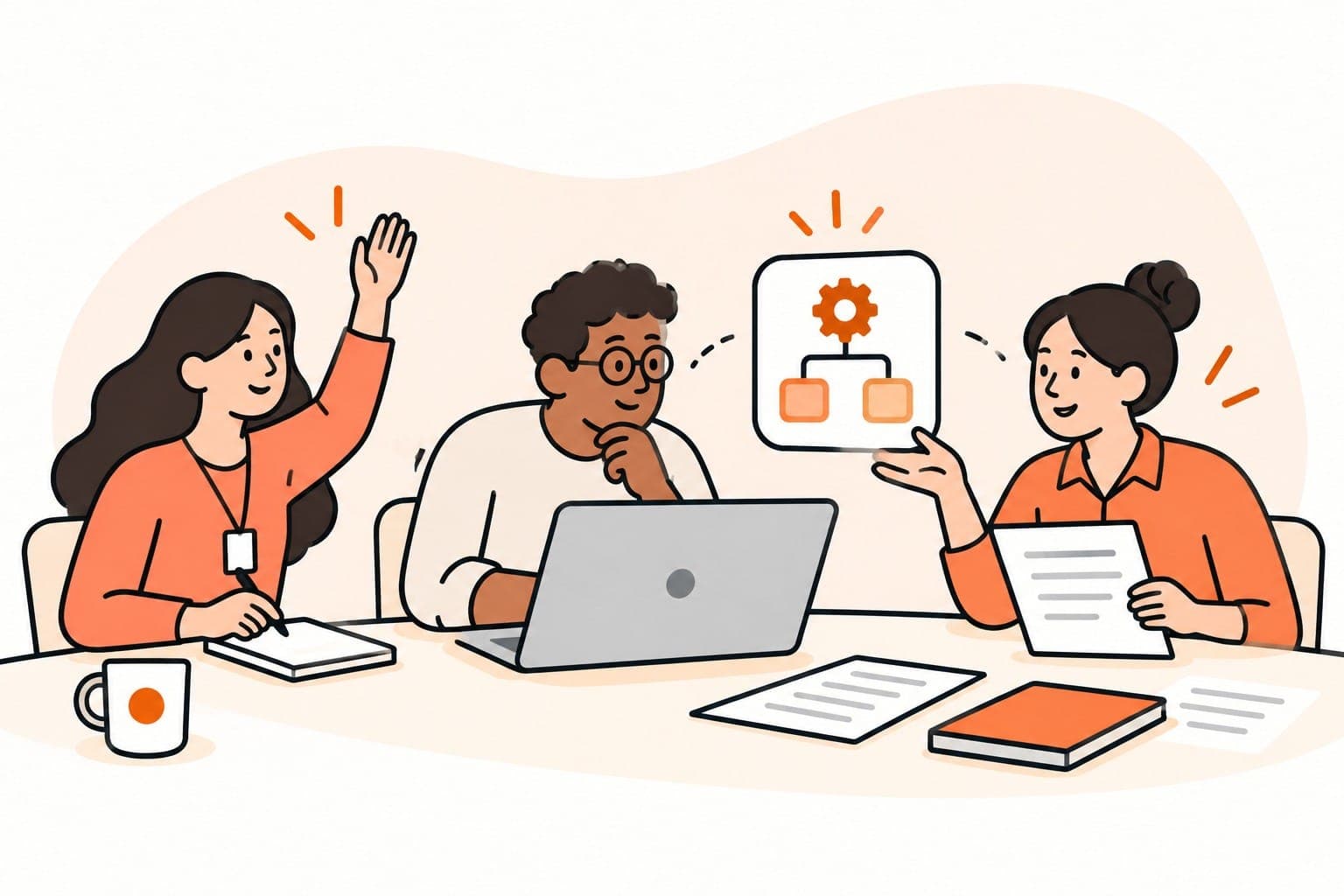
Someone should be able to say, “I do not understand this result,” while learning an AI tool at work. That is a useful question to hear before the result reaches a customer.
Expecting instant confidence can make a trial harder to evaluate. You need to know what people tried, what they could check and where the tool left them uncertain.
Give the learning process a clear task and a place for questions.
Choose one shared task
Instead of asking everyone to “use AI more,” choose a piece of work that the group can examine together. Use approved, non-sensitive examples and define the expected result.
A hypothetical cleaning business could try drafting a service explanation from its public scope sheet. Staff could check whether the draft preserves the actual inclusions and exclusions. They would have a common example to discuss, rather than comparing unrelated demonstrations.
Agree which tool is appropriate for the trial and what information may be used. If someone is unsure whether material is suitable, give them a person to ask before entering it.
Review a mistake without hiding it
Keep a failed output as well as a useful one. Ask what went wrong and how the reviewer noticed.
Did the tool invent a service? Was the source incomplete? Did a correct sentence become misleading when the surrounding condition disappeared?
Those observations can improve the task brief and the review checklist. They can also show that a particular use is not reliable enough to continue.
Be careful about treating a fluent explanation as evidence of understanding. Ask someone to demonstrate the task, explain what they checked and identify a result they would reject.
Make help part of the process
Choose a person who can answer workflow questions or find the right help. They do not need to pretend to know every tool. They do need a clear way to investigate uncertainty.
Set aside time to compare examples. Ask people what required more effort than expected and whether the task still felt useful after review.
Do not make the discussion a contest over who produced the most output. A person who spots a wrong customer promise has contributed something important to the trial.
Record the rules people need tomorrow
Keep the working guidance short enough to use. Include the approved task, permitted information, review standard and actions that need approval.
Write down how to report a fault and how ordinary work continues if the tool is unavailable. Check that another person can follow those instructions.
As the trial changes, update the guidance rather than leaving important corrections buried in a chat thread.
Expand when the evidence supports it
At the review, ask whether the tool produced useful work with an acceptable checking burden. Include the exceptions and missing information in that discussion.
You may decide to keep the same narrow task, improve the instructions or stop the trial. None of those decisions requires the group to claim expertise it has not developed.
For help turning an AI experiment into a clear working process, tell us what you tried and where people became unsure. We can help define the next useful test.